 BXI Builingual System started translating.
Transpersonal NOT Transhumanist
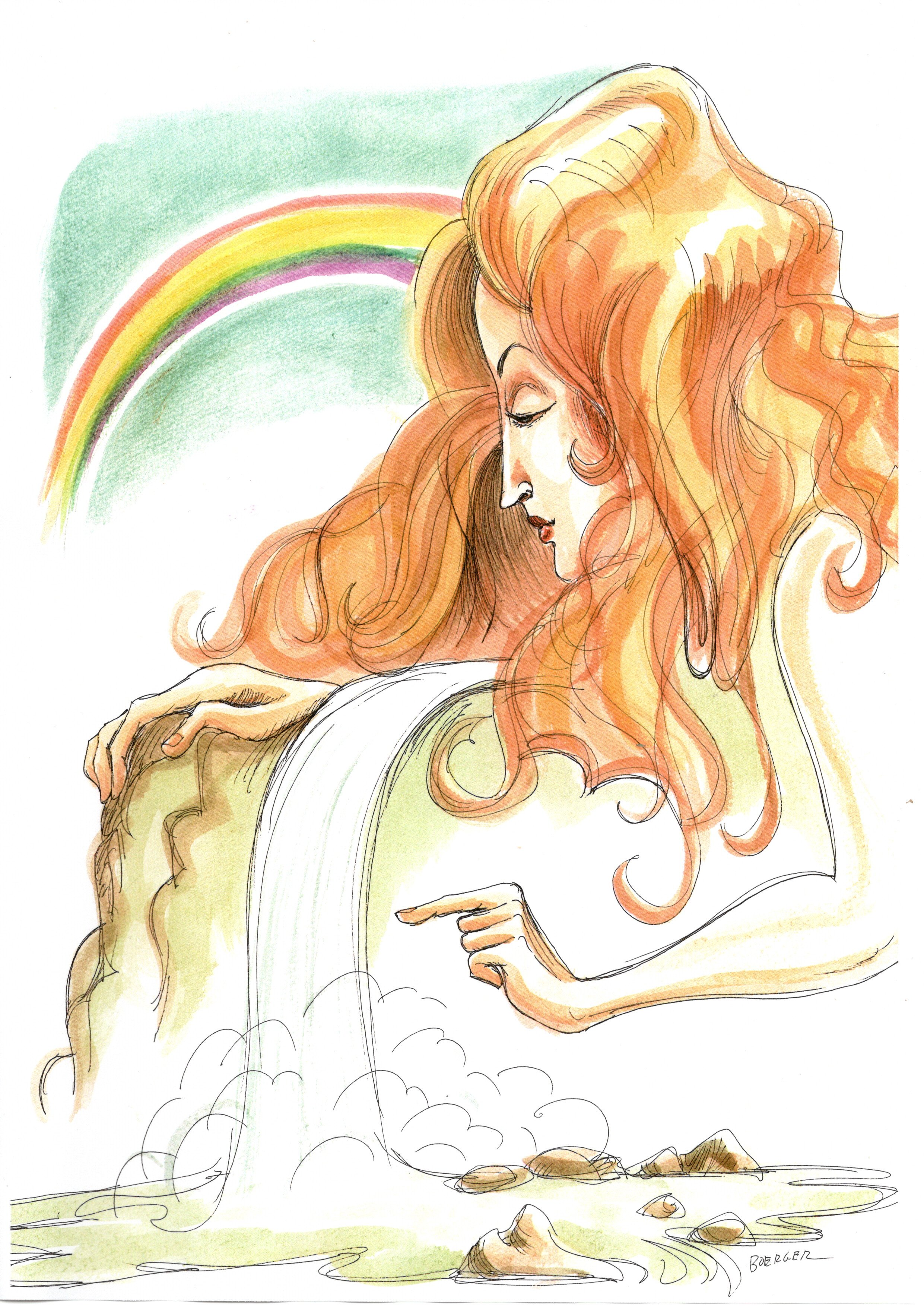
Transpersonal, NOT Transhumanist!
Our bodies age and die, like the bodies of every other biological organism. Within each body, countless iterations of the aging/dying process unfold at a cellular level, moment by moment. Heck, even our species will eventually become extinct as have so many species before us. There is nothing special here; it is the way of living things.
There have always been humans who have wished to defy this. Pharaohs and tyrants, practitioners of black magic. Probably going far further back into history than agriculture, awareness of our mortality has stood as more challenge than inevitability to some, who have felt that their mere irritation with the way things are must somehow mean that things don't have to be that way. Because they are 'special'.
In terms of the hubris, the indignation and the feeling that 'I'm different', today's transhumanists have much in common with Ramses II. What they have that he didn't is.... a way. Actually any number of ways by which they may transcend the built-in limitations of cellular life. They all involve extraordinary advances in technology that promise to render death, as we know it, obsolete.
Things such as precision nanobots running through the human bloodstream, zapping pathogens, perhaps even rejuvenating cells. Or simply abandoning the organism altogether, and placing one's consciousness in a 'superior' apparatus capable of living thousands of years or longer, and then being replaced with a fresh unit. Or one's consciousness living without any particular form at all, in an upgrade of 'the cloud', experiencing whatever it wants to experience at any given moment. This is what it means to be 'transhuman' to the geeks, AI true believers, 'Singularitans' and others who embrace this soon to materialize future.
They can have it.
Except they actually can’t. There is virtually no possibility of these fanciful scenarios actually coming to bear, because they are so aggressively positioned against the nature of reality. They are like ivory towers floating somewhere near the Van Allen Belt.
2500 years or so ago, as Athenian scholars were laying the intellectual groundwork for the transhumanist vision of technology liberating humanity (or certain sections thereof) from the limitations of the flesh, in far off India scholars of another kind were pursuing a different path.
These scholars were concerned with the inner worlds that become accessible through meditation, and were sharing their discoveries and techniques with followers who were willing to undergo the rigorous training involved.
Their discoveries are not known and honored like those of the descendants of Aristotlean logic in our modern - technology addicted society - but that is a tragedy. Because at a time when the folly of 'transhumanism' is gaining steam, what would truly benefit humanity and possibly secure our future and our progeny's as well is the transpersonal path. It is by becoming transpersonal - NOT transhumanist - and recognizing our shared Oneness, that we will discard the greed, cruelty and depravity that hold us back and cause unfathomable suffering.
Becoming transpersonal, rather than transhumanist, offers benefits for individuals as well as society, now and into the future.
Let's briefly define both terms, and see what - if any - overlap there is between them.
'Transhumanism' is a belief that humans have the ability - if we choose to use it (and 'we' refers to the scientists/engineers/inventors who will do the heavy lifting for us) - to transcend our biological limitations and upgrade ourselves through technology to become a sort of 'homo technicus', possibly not even needing oxygen to survive.
'Transpersonal' means looking beyond one's individual expression to recognize a shared oneness, not only with other human beings, but with all living things and even with the source of all that exists.
In both cases, there are variations on the central theme. A transhumanist may believe it is mankind's destiny to fill all dead matter in the universe with human created superconsciousness. Or they may merely believe that humans will soon be able to connect directly with AI in ways that confer greatly expanded intelligence and a greatly extended lifespan on them.
Transpersonal adherents may believe that humanity's ultimate destiny is to merge with Source, thereby forever ending all discord and disharmony within the human expression, living as fully realized children of God thereafter. Or they may simply believe that we owe it to one another and ourselves to view all life as connected and sacred, and try to live with that in mind in our daily activities and encounters.
Is there overlap? At the more extreme ends of both, there is. A transpersonal thinker believes that we ultimately will come to experience ourselves as one with all things, including the source of all things. Just as spokes on a bicycle tire diverge from each other but trace back to the same central point, in this view humans remain connected to our central point and ultimately will make our way back to it, where we are connected with everything and everyone that has ever diverged from it.
Transhumanist thinkers have a variation on the 'all are One' viewpoint in thinking that a technological point of convergence may emerge, where my consciousness will be able to connect to and blend with all other consciousness (a superintelligent variation of 'the cloud') in a way that makes every experience (every delight, every adventure, every dream scenario) available to all. Heaven, by this way of thinking, doesn't exist yet but theoretically can exist when we figure out how to invent it.
You could say that these more extreme versions of transhumanism have their roots in transpersonal philosophy. Transhumanists yearn for the higher experiences that sages throughout time have talked about, but feel that the universe comes up short in actually delivering on such promises, leaving it up to human ingenuity and inventiveness to achieve what humanity has desired from long, long ago.
Transpersonal, in this view, has been all talk. It is up to transhumanism to start putting some meat on the bone.
Let's get this part out of the way: the transhumanist vision is at best partly, and at worst entirely delusional. Why the distinction? Well, first it is helpful to recall that transhumanism precedes AI. There have been dreamers and visionaries who have predicted and called for a technological utopia to lift humankind beyond all physical and mental restrictions since the early days of the Industrial Revolution if not before. Though I consider this folly, to a certain degree I consider it a laudable goal to have in mind. Not my personal cup of tea; however it doesn't bother me that some would see technology as mankind's salvation any more than than if someone sees Art, or Music, or Philosophy as holding the promise of raising us up to stand alongside gods. So, maybe this isn't a delusion and maybe it is. I wish all dreamers and idealists well.
The delusion comes about in thinking that AI is the technology that punches our ticket to the promised land. First of all, why should it be? Is there anything in its emergence that suggests such a lofty role for it? There is certainly not.
AI depends on two things in order to exist at all and in order to grow; the internet and Big Data. And what are the auspicious Origin Stories of these two ingredients?
The internet began as ARPANET, a linking of a few US university computer systems which was set up to help America win the Cold War. It might also have been set up to create more billionaires and help them eventually become trillionaires, but that was hardly a selling point so one can only speculate. The point is that this network was devised to facilitate strategic superiority for one Cold War adversary over another. If both have H bombs, let's try something else, in other words.
As for Big Data, its origins are, if anything, even less illustrious. The history of digital data collection begins as an extension of market research. McDonald's, Burger King, Proctor & Gamble, Unilever and others wanted to learn as much as possible about you, the consumer, so they could figure out how to win in the marketplace. That's pretty much it. If data helped them sell more toothpaste tubes, then data was Da Bomb!
There you have it, the Zeus and Hera of AI are Cold War strategizing and Mad Men shlepping. Does THIS sound like the technology that will create Peace on Earth and turn us all into Einsteins?
There may of course be other ways to achieve artificial intelligence, and these may spring from higher ambitions than the current model did. But that's not where we are right now. Right now it is this version of AI that the transhumanists are putting their hopes and dreams into.
It is also important to point out when comparing transpersonalism with transhumanism that there has never been a transhuman. Nobody can argue that they are transhuman (although assuredly Ray Kurzweill wishes he could claim such), but merely that they are transhumanist. In other words, they are looking toward an expected future event, which is dependent on technology catching up with the fanciful predictions made about it. Meaning that transhumanism is something that IS thinking and talking about something that is NOT.
Such is not the case concerning transpersonalism. This is ironic, because undoubtedly there are those in the transhumanist camp who assert that all transpersonal accounts are merely made up shit, utterly subjective and mostly or completely delusional.
But...they are wrong about that, and anyone who has actually HAD transpersonal experiences - and there are many of us and there have long been many of us - knows this to be true.
The Transpersonal Experience and the Role of Meditation
For the majority of those of us in the transpersonal camp, meditation is the path that has taken us out of the exclusively personal and onward and outward (and inward, of course) toward the transpersonal.
Meditation has long been taught in numerous esoteric traditions, and though different traditions teach different things, and various meditators have various experiences related to meditation, the one thing that all traditions have in common is the teaching that meditation is a pathway to the transpersonal, in other words to the realization that 'All are One and All is Source'.
This is THE prime esoteric realization, and it is available to all who are willing to follow the path to it. It isn't waiting for a small coterie of techno whizzes to make it happen, and doesn't hover in the near or distant future. It is here, now, and has always been here and now. There is, in fact, no other place for it to be. Transpersonal is Reality, plain and simple. Yours as much as mine, skeptics' as much as adherents’.
What exactly do I mean by 'transpersonal experience'?
Succinctly, it is both realization and attainment. Since that is unlikely to mean much to people who have not experienced it, let me attempt to explain.
Let's recall the analogy I offered previously, of spokes on a bicycle tire. Each spoke is at its greatest distance from every other spoke at the outer end, where the spoke hits the rubber one might say. We could think of your personality, my personality and everyone else's operating here, at this outer circumference.
At the opposite end is the hub, the point from which all spokes radiate outward. We can liken this to what a yogi might refer to as 'Source', or 'The One' or 'Brahman'.
Everything that is radiates out from this central hub, and NOTHING exists that does NOT radiate out from it.
Now, at any point if you were to trace inwards from the far end of the spoke toward the center, you would not only be moving toward the center on that spoke alone. You would also be shortening the distance between that spoke and all other spokes. In other words, if it was three centimeters distant from the nearest spoke at the outer end, at some point as you trace inward that spoke would be two centimeters distant, then one, then half a centimeter and so on.
This is what the transpersonal experience is like. It is not only one's realization of one's own transpersonal nature, but of the transpersonal nature of all others as well. The closer you get to the center, the closer you realize all others are to the center as well.
On the plane of personalities, no other 'spoke' needs to recognize its transpersonal nature for you to recognize it about them. Thus 'trans'personal. One cannot merely transcend the personal regarding oneself, but must inevitably do so for others as well. From your own vantage point - closer to the Source - you see all others there as well. You, instinctively, remember for them what they are not presently recognizing about themselves.
The ultimate example of this is the story of the cross, from Christian lore, where it is told that Jesus said, 'forgive them, for they know not what they do'. In such a situation, it would be only natural for Jesus to have seen his torturers and executioners from his own vantage point, closer to Source and beyond the cruelty and sadism they were exhibiting at the level of personality.
Now we can understand the meaning of the words 'realization' and 'attainment'. Not only does Jesus in this story realize his transpersonal nature, he is able to see it in people who are doing the worst possible things to him. He has attained a higher expression of what it means to be a human being.
Now, my using this example is not to say that it is anything more than a story. But AS a story, it gives an excellent example of what transpersonal realization is like. It is an extreme example of how the transpersonal can play out in one's life. There are numerous examples of people forgiving people who have killed their loved ones, visiting them in prison, etc. These are yet more examples of transpersonal realization/attainment. Whether they realize it or not, or use the same terms as I do, such acts are, inherently, transpersonal.
Why is meditation so important? What doors does it unlock?
It comes right down to terminology, with 'trans' meaning beyond, and 'personal' meaning your ongoing picture of yourself, as a personality having day to day experiences. Meditation is the best tool humans have ever designed (a technology of the mind) to move out of that and go someplace else.
The personality is inherently self involved and self interested. It lives its life churning out a stream of sentences, most of which begin with 'I'.
I am done working for today.
I am ready for a beer.
I wish people saw my value at work.
I might start looking for a new job.
I think I nailed that explanation.
And so on, and so on, and so on, and so on, till the last syllable of recorded you.
How can one hope to become transpersonal - in other words, move beyond the personality - in such a state of self obsession?
Meditation, by quieting the mind, by disengaging it from the continual flow of 'I' sentences, releases us from that trap.
It is a practice; it takes time. It takes effort. It takes attention most of all. And many people simply aren't willing to give it the time/effort/attention it needs. Furthermore, as every meditator knows all too well, the 'I' sentences don't exactly like giving up their position on the throne of the mind.
As petty and mundane and often vain (as well as self abnegating) as those 'I' sentences are, the personality is quite content to churn them out from morning till bedtime. It seems to think there is nothing better to do with human consciousness. What about art, invention, creativity, etc.? Certainly the personality acknowledges that they are of higher value than the 'I' sentences. But every creation of art and every invention begins with 'I'.
I have an idea.
I think this is an interesting idea.
I might become famous because this idea is so fresh and unusual.
yada yada yada.
Not bad, of course. Just nothing transpersonal to be found there, at least most of the time.
Beethoven may have created elevating music, but the work involved in doing so was personal, not transpersonal.
Meditation, when done properly, is the most surefire way to move out of those 'I' sentences. To see what else is going on in one's consciousness. And what one finds is quite astonishing.
It is true that meditation is a great technique to quiet the mind, and for that reason alone is worth doing as it brings both mental and physical health benefits. But if you are only meditating to quiet the mind, that's like purchasing a newly discovered Rose Period Picasso to have something pretty to hang in your living room.
The greatest value of meditation is the access it provides to the transpersonal. Quieting the mind is the gateway. Without all the 'I' sentences cramming our minds like a rush hour train car, other aspects of our consciousness can emerge. And as they do, we can cultivate the practice of engaging with them. Significantly, we can develop the practice of well considered inquiry. We can turn to these deeper aspects of ourselves with questions we have long held, perhaps never even fully expressed before.
This engagement is key, as it shows us that we are smarter/wiser than we imagined ourselves to be, as the answers to these questions begin to materialize. A dialog of sorts begins to emerge; a dialog with a trusted elder and close confidante. It seems like someone else, but it is US! And that is because we are much more than our personality, and we are not trapped at the level of personality, with its insecurities and its vanities.We even grow to love these insecurities and vanities. They are so much easier to love when we understand that they are nothing more than one aspect of who we actually are.
Now meditation has gone beyond merely quieting the mind. It has introduced us to the transpersonal realm, a realm we share with all others. I am not merely my personality, and neither are you. I see you, and the world, differently.
And what seemed bleak and hopeless now seems merely unripe. We know we can do better because we have acquainted ourselves with the parts of ourselves and others that are capable of doing better.
Whereas transhumanism fixates upon the idea of dropping the flawed biological organism in order to achieve utopia/immortality (not through collective effort but dependent on the most technologically gifted among us) by replacing it with something better, transpersonal understanding looks upon our flawed humanity with great love and appreciation. Tenderly, as one looks upon a child. Not contemptuously, as a child looks upon a toy that no longer interests it.
So, which course will humanity choose: transpersonal, transhumanist, or neither? Objectively, the wise betting would be on the latter, as both transhumanism and transpersonalism are currently fringe pursuits of a small minority, hardly mainstream. It seems like the mass of humanity will probably just keep plodding along as it always has.
However, in terms of trashumanism, the worrisome aspect is just how much power, money and influence those on the fringe have. There are elements of transhumanism to be found in the statements of Elon Musk, Sam Altman, Bill Gates and Peter Thiel, among others. These are men who essentially worship technology and are willing to devote vast resources to pushing it forward so that it comes to dominate human society in ways that it previously hasn't. Their guru of sorts is Ray Kurzweill, the self promoting tech savant who has been preaching about The Singularity for years now, still boldly proclaiming a true 'deus ex machina' arriving like the Messiah by 2045 if not earlier.
There have always been humans who have wished to defy this. Pharaohs and tyrants, practitioners of black magic. Probably going far further back into history than agriculture, awareness of our mortality has stood as more challenge than inevitability to some, who have felt that their mere irritation with the way things are must somehow mean that things don't have to be that way. Because they are 'special'.
In terms of the hubris, the indignation and the feeling that 'I'm different', today's transhumanists have much in common with Ramses II. What they have that he didn't is.... a way. Actually any number of ways by which they may transcend the built-in limitations of cellular life. They all involve extraordinary advances in technology that promise to render death, as we know it, obsolete.
Things such as precision nanobots running through the human bloodstream, zapping pathogens, perhaps even rejuvenating cells. Or simply abandoning the organism altogether, and placing one's consciousness in a 'superior' apparatus capable of living thousands of years or longer, and then being replaced with a fresh unit. Or one's consciousness living without any particular form at all, in an upgrade of 'the cloud', experiencing whatever it wants to experience at any given moment. This is what it means to be 'transhuman' to the geeks, AI true believers, 'Singularitans' and others who embrace this soon to materialize future.
They can have it.
Except they actually can’t. There is virtually no possibility of these fanciful scenarios actually coming to bear, because they are so aggressively positioned against the nature of reality. They are like ivory towers floating somewhere near the Van Allen Belt.
2500 years or so ago, as Athenian scholars were laying the intellectual groundwork for the transhumanist vision of technology liberating humanity (or certain sections thereof) from the limitations of the flesh, in far off India scholars of another kind were pursuing a different path.
These scholars were concerned with the inner worlds that become accessible through meditation, and were sharing their discoveries and techniques with followers who were willing to undergo the rigorous training involved.
Their discoveries are not known and honored like those of the descendants of Aristotlean logic in our modern - technology addicted society - but that is a tragedy. Because at a time when the folly of 'transhumanism' is gaining steam, what would truly benefit humanity and possibly secure our future and our progeny's as well is the transpersonal path. It is by becoming transpersonal - NOT transhumanist - and recognizing our shared Oneness, that we will discard the greed, cruelty and depravity that hold us back and cause unfathomable suffering.
Becoming transpersonal, rather than transhumanist, offers benefits for individuals as well as society, now and into the future.
Let's briefly define both terms, and see what - if any - overlap there is between them.
'Transhumanism' is a belief that humans have the ability - if we choose to use it (and 'we' refers to the scientists/engineers/inventors who will do the heavy lifting for us) - to transcend our biological limitations and upgrade ourselves through technology to become a sort of 'homo technicus', possibly not even needing oxygen to survive.
'Transpersonal' means looking beyond one's individual expression to recognize a shared oneness, not only with other human beings, but with all living things and even with the source of all that exists.
In both cases, there are variations on the central theme. A transhumanist may believe it is mankind's destiny to fill all dead matter in the universe with human created superconsciousness. Or they may merely believe that humans will soon be able to connect directly with AI in ways that confer greatly expanded intelligence and a greatly extended lifespan on them.
Transpersonal adherents may believe that humanity's ultimate destiny is to merge with Source, thereby forever ending all discord and disharmony within the human expression, living as fully realized children of God thereafter. Or they may simply believe that we owe it to one another and ourselves to view all life as connected and sacred, and try to live with that in mind in our daily activities and encounters.
Is there overlap? At the more extreme ends of both, there is. A transpersonal thinker believes that we ultimately will come to experience ourselves as one with all things, including the source of all things. Just as spokes on a bicycle tire diverge from each other but trace back to the same central point, in this view humans remain connected to our central point and ultimately will make our way back to it, where we are connected with everything and everyone that has ever diverged from it.
Transhumanist thinkers have a variation on the 'all are One' viewpoint in thinking that a technological point of convergence may emerge, where my consciousness will be able to connect to and blend with all other consciousness (a superintelligent variation of 'the cloud') in a way that makes every experience (every delight, every adventure, every dream scenario) available to all. Heaven, by this way of thinking, doesn't exist yet but theoretically can exist when we figure out how to invent it.
You could say that these more extreme versions of transhumanism have their roots in transpersonal philosophy. Transhumanists yearn for the higher experiences that sages throughout time have talked about, but feel that the universe comes up short in actually delivering on such promises, leaving it up to human ingenuity and inventiveness to achieve what humanity has desired from long, long ago.
Transpersonal, in this view, has been all talk. It is up to transhumanism to start putting some meat on the bone.
Let's get this part out of the way: the transhumanist vision is at best partly, and at worst entirely delusional. Why the distinction? Well, first it is helpful to recall that transhumanism precedes AI. There have been dreamers and visionaries who have predicted and called for a technological utopia to lift humankind beyond all physical and mental restrictions since the early days of the Industrial Revolution if not before. Though I consider this folly, to a certain degree I consider it a laudable goal to have in mind. Not my personal cup of tea; however it doesn't bother me that some would see technology as mankind's salvation any more than than if someone sees Art, or Music, or Philosophy as holding the promise of raising us up to stand alongside gods. So, maybe this isn't a delusion and maybe it is. I wish all dreamers and idealists well.
The delusion comes about in thinking that AI is the technology that punches our ticket to the promised land. First of all, why should it be? Is there anything in its emergence that suggests such a lofty role for it? There is certainly not.
AI depends on two things in order to exist at all and in order to grow; the internet and Big Data. And what are the auspicious Origin Stories of these two ingredients?
The internet began as ARPANET, a linking of a few US university computer systems which was set up to help America win the Cold War. It might also have been set up to create more billionaires and help them eventually become trillionaires, but that was hardly a selling point so one can only speculate. The point is that this network was devised to facilitate strategic superiority for one Cold War adversary over another. If both have H bombs, let's try something else, in other words.
As for Big Data, its origins are, if anything, even less illustrious. The history of digital data collection begins as an extension of market research. McDonald's, Burger King, Proctor & Gamble, Unilever and others wanted to learn as much as possible about you, the consumer, so they could figure out how to win in the marketplace. That's pretty much it. If data helped them sell more toothpaste tubes, then data was Da Bomb!
There you have it, the Zeus and Hera of AI are Cold War strategizing and Mad Men shlepping. Does THIS sound like the technology that will create Peace on Earth and turn us all into Einsteins?
There may of course be other ways to achieve artificial intelligence, and these may spring from higher ambitions than the current model did. But that's not where we are right now. Right now it is this version of AI that the transhumanists are putting their hopes and dreams into.
It is also important to point out when comparing transpersonalism with transhumanism that there has never been a transhuman. Nobody can argue that they are transhuman (although assuredly Ray Kurzweill wishes he could claim such), but merely that they are transhumanist. In other words, they are looking toward an expected future event, which is dependent on technology catching up with the fanciful predictions made about it. Meaning that transhumanism is something that IS thinking and talking about something that is NOT.
Such is not the case concerning transpersonalism. This is ironic, because undoubtedly there are those in the transhumanist camp who assert that all transpersonal accounts are merely made up shit, utterly subjective and mostly or completely delusional.
But...they are wrong about that, and anyone who has actually HAD transpersonal experiences - and there are many of us and there have long been many of us - knows this to be true.
The Transpersonal Experience and the Role of Meditation
For the majority of those of us in the transpersonal camp, meditation is the path that has taken us out of the exclusively personal and onward and outward (and inward, of course) toward the transpersonal.
Meditation has long been taught in numerous esoteric traditions, and though different traditions teach different things, and various meditators have various experiences related to meditation, the one thing that all traditions have in common is the teaching that meditation is a pathway to the transpersonal, in other words to the realization that 'All are One and All is Source'.
This is THE prime esoteric realization, and it is available to all who are willing to follow the path to it. It isn't waiting for a small coterie of techno whizzes to make it happen, and doesn't hover in the near or distant future. It is here, now, and has always been here and now. There is, in fact, no other place for it to be. Transpersonal is Reality, plain and simple. Yours as much as mine, skeptics' as much as adherents’.
What exactly do I mean by 'transpersonal experience'?
Succinctly, it is both realization and attainment. Since that is unlikely to mean much to people who have not experienced it, let me attempt to explain.
Let's recall the analogy I offered previously, of spokes on a bicycle tire. Each spoke is at its greatest distance from every other spoke at the outer end, where the spoke hits the rubber one might say. We could think of your personality, my personality and everyone else's operating here, at this outer circumference.
At the opposite end is the hub, the point from which all spokes radiate outward. We can liken this to what a yogi might refer to as 'Source', or 'The One' or 'Brahman'.
Everything that is radiates out from this central hub, and NOTHING exists that does NOT radiate out from it.
Now, at any point if you were to trace inwards from the far end of the spoke toward the center, you would not only be moving toward the center on that spoke alone. You would also be shortening the distance between that spoke and all other spokes. In other words, if it was three centimeters distant from the nearest spoke at the outer end, at some point as you trace inward that spoke would be two centimeters distant, then one, then half a centimeter and so on.
This is what the transpersonal experience is like. It is not only one's realization of one's own transpersonal nature, but of the transpersonal nature of all others as well. The closer you get to the center, the closer you realize all others are to the center as well.
On the plane of personalities, no other 'spoke' needs to recognize its transpersonal nature for you to recognize it about them. Thus 'trans'personal. One cannot merely transcend the personal regarding oneself, but must inevitably do so for others as well. From your own vantage point - closer to the Source - you see all others there as well. You, instinctively, remember for them what they are not presently recognizing about themselves.
The ultimate example of this is the story of the cross, from Christian lore, where it is told that Jesus said, 'forgive them, for they know not what they do'. In such a situation, it would be only natural for Jesus to have seen his torturers and executioners from his own vantage point, closer to Source and beyond the cruelty and sadism they were exhibiting at the level of personality.
Now we can understand the meaning of the words 'realization' and 'attainment'. Not only does Jesus in this story realize his transpersonal nature, he is able to see it in people who are doing the worst possible things to him. He has attained a higher expression of what it means to be a human being.
Now, my using this example is not to say that it is anything more than a story. But AS a story, it gives an excellent example of what transpersonal realization is like. It is an extreme example of how the transpersonal can play out in one's life. There are numerous examples of people forgiving people who have killed their loved ones, visiting them in prison, etc. These are yet more examples of transpersonal realization/attainment. Whether they realize it or not, or use the same terms as I do, such acts are, inherently, transpersonal.
Why is meditation so important? What doors does it unlock?
It comes right down to terminology, with 'trans' meaning beyond, and 'personal' meaning your ongoing picture of yourself, as a personality having day to day experiences. Meditation is the best tool humans have ever designed (a technology of the mind) to move out of that and go someplace else.
The personality is inherently self involved and self interested. It lives its life churning out a stream of sentences, most of which begin with 'I'.
I am done working for today.
I am ready for a beer.
I wish people saw my value at work.
I might start looking for a new job.
I think I nailed that explanation.
And so on, and so on, and so on, and so on, till the last syllable of recorded you.
How can one hope to become transpersonal - in other words, move beyond the personality - in such a state of self obsession?
Meditation, by quieting the mind, by disengaging it from the continual flow of 'I' sentences, releases us from that trap.
It is a practice; it takes time. It takes effort. It takes attention most of all. And many people simply aren't willing to give it the time/effort/attention it needs. Furthermore, as every meditator knows all too well, the 'I' sentences don't exactly like giving up their position on the throne of the mind.
As petty and mundane and often vain (as well as self abnegating) as those 'I' sentences are, the personality is quite content to churn them out from morning till bedtime. It seems to think there is nothing better to do with human consciousness. What about art, invention, creativity, etc.? Certainly the personality acknowledges that they are of higher value than the 'I' sentences. But every creation of art and every invention begins with 'I'.
I have an idea.
I think this is an interesting idea.
I might become famous because this idea is so fresh and unusual.
yada yada yada.
Not bad, of course. Just nothing transpersonal to be found there, at least most of the time.
Beethoven may have created elevating music, but the work involved in doing so was personal, not transpersonal.
Meditation, when done properly, is the most surefire way to move out of those 'I' sentences. To see what else is going on in one's consciousness. And what one finds is quite astonishing.
It is true that meditation is a great technique to quiet the mind, and for that reason alone is worth doing as it brings both mental and physical health benefits. But if you are only meditating to quiet the mind, that's like purchasing a newly discovered Rose Period Picasso to have something pretty to hang in your living room.
The greatest value of meditation is the access it provides to the transpersonal. Quieting the mind is the gateway. Without all the 'I' sentences cramming our minds like a rush hour train car, other aspects of our consciousness can emerge. And as they do, we can cultivate the practice of engaging with them. Significantly, we can develop the practice of well considered inquiry. We can turn to these deeper aspects of ourselves with questions we have long held, perhaps never even fully expressed before.
This engagement is key, as it shows us that we are smarter/wiser than we imagined ourselves to be, as the answers to these questions begin to materialize. A dialog of sorts begins to emerge; a dialog with a trusted elder and close confidante. It seems like someone else, but it is US! And that is because we are much more than our personality, and we are not trapped at the level of personality, with its insecurities and its vanities.We even grow to love these insecurities and vanities. They are so much easier to love when we understand that they are nothing more than one aspect of who we actually are.
Now meditation has gone beyond merely quieting the mind. It has introduced us to the transpersonal realm, a realm we share with all others. I am not merely my personality, and neither are you. I see you, and the world, differently.
And what seemed bleak and hopeless now seems merely unripe. We know we can do better because we have acquainted ourselves with the parts of ourselves and others that are capable of doing better.
Whereas transhumanism fixates upon the idea of dropping the flawed biological organism in order to achieve utopia/immortality (not through collective effort but dependent on the most technologically gifted among us) by replacing it with something better, transpersonal understanding looks upon our flawed humanity with great love and appreciation. Tenderly, as one looks upon a child. Not contemptuously, as a child looks upon a toy that no longer interests it.
So, which course will humanity choose: transpersonal, transhumanist, or neither? Objectively, the wise betting would be on the latter, as both transhumanism and transpersonalism are currently fringe pursuits of a small minority, hardly mainstream. It seems like the mass of humanity will probably just keep plodding along as it always has.
However, in terms of trashumanism, the worrisome aspect is just how much power, money and influence those on the fringe have. There are elements of transhumanism to be found in the statements of Elon Musk, Sam Altman, Bill Gates and Peter Thiel, among others. These are men who essentially worship technology and are willing to devote vast resources to pushing it forward so that it comes to dominate human society in ways that it previously hasn't. Their guru of sorts is Ray Kurzweill, the self promoting tech savant who has been preaching about The Singularity for years now, still boldly proclaiming a true 'deus ex machina' arriving like the Messiah by 2045 if not earlier.


