 BXI Builingual System started translating.
Choice Points or No Free Will
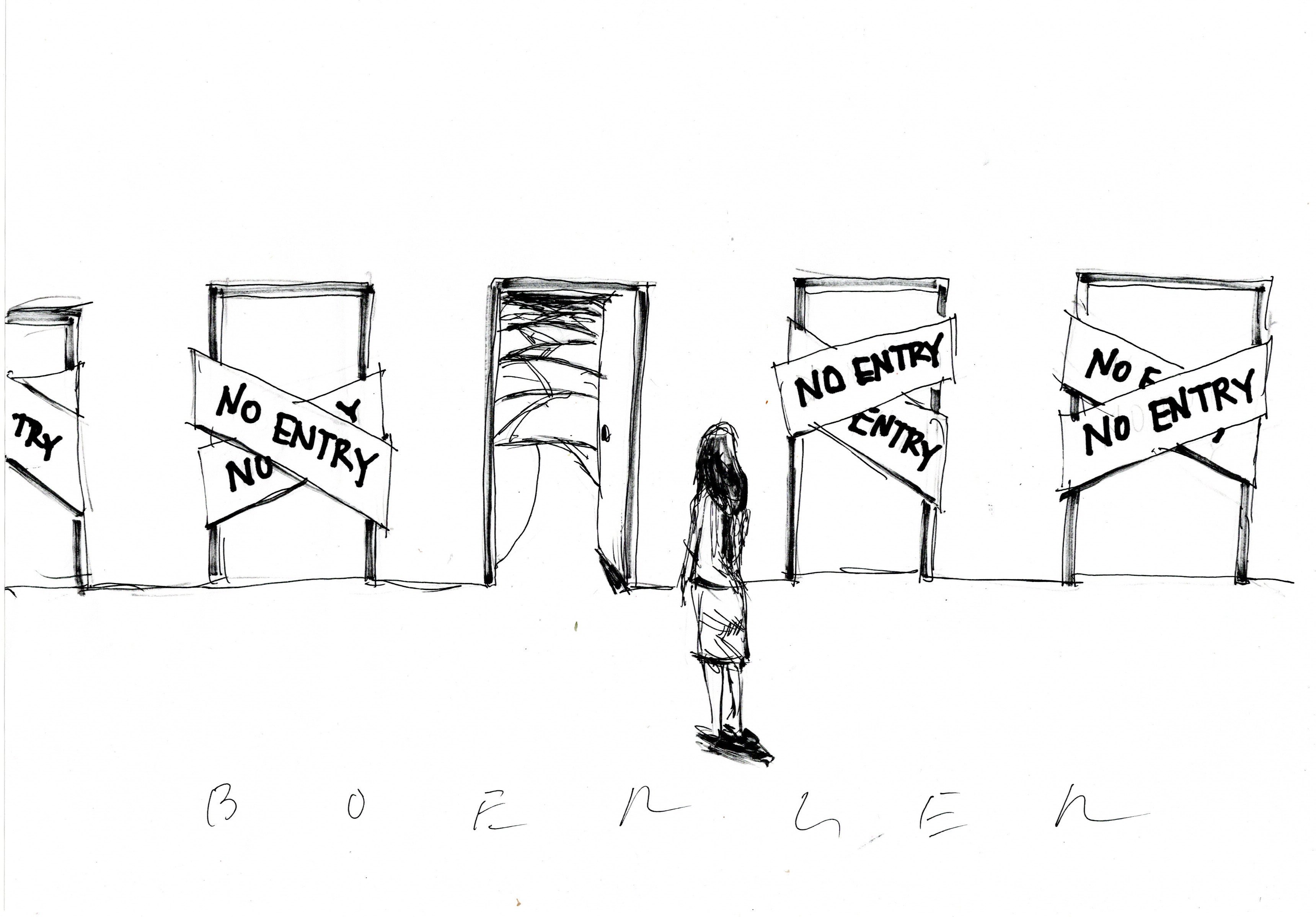
It is in vogue these days - in neuroscience, in philosophy, in New Atheism, etc to claim that 'free will is an illusion'. We THINK we make choices, but we actually don't. It is all a set up. To claim that we DO have free will is to effectively ignore the whole scientific edifice on which our understanding of the universe is built. We are atoms in motion, our minds are more of the same, and it all really comes down to just that: atoms in motion.
By such reasoning, I have no more free will to choose a popsicle over a kale salad than a rock has to continue to be a rock, or a supernova has to explode. One might be accused of swallowing a load of 'woo' and bollocks simply for maintaining the idea that we make our own decisions.
But I reject this premise, and my reason for doing so is quite simple. I believe that our lives proceed, good or bad, largely according to how we navigate certain pivotal moments within them. I refer to them as Choice Points. I believe they are the unsung heroes of a life well lived. Yet, if 'free will is an illusion' then they don't actually exist.
These Choice Points ~ as I have experienced them ~ don't just pop out of nowhere. We seem guided to them, and I maintain that we ARE guided to them. This causes the No Free Will crowd to scoff. Nevertheless, I maintain that we DO have free will. These Choice Points have made me who I am, so to speak, and have given form and clarity to my consciousness. It would surprise me not in the least if they have done the same for you. To facilely buy into the idea that we have no free will, without at least considering the purpose and importance of Choice Points in a human life, would be tragic.
There are two kinds of Choice Points, the generic and the personal. I will refer to the former as ‘choice points’ and restrict upper case letters to the latter. Generic choice points are such moments that we all face, when we must choose what career path to pursue, is this really the person we want to commit ourselves to in relationships, should we leave our hometown in search of better prospects elsewhere, etc. Everyone experiences variations of these; they are part of being human, after all. And I’m sure we all recognize that our lives would have played out very differently had we made different choices. If Jimi had decided to stay in the army as a steady career prospect and kept the guitar as a cherished hobby, not only his life but ours as well would have significantly altered.
It is the other kind, the personal, that I am more concerned with, because I am so fascinated by how they have come about in my own life. These are the moments that seem somehow curated. Pieces were put in place that led up to them, NOT in a determinist manner but as laying the groundwork for an initiation ritual where how one decides is pivotal. The entire direction our life will take hinges on how we decide to meet such moments.
I consider these Choice Points to be the very juice of my own life. Though they were brief (often instantaneous), came about suddenly and -seemingly - spontaneously, they impacted my life in even greater ways than such generic choice points as career and relationship choices. I believe that I was guided toward them and - more often than not - believe that I 'passed the test' and placed myself along a happier and more meaningful timeline going forward than would have presented itself to me had I 'failed'.
However, as meaningful, and pivotal, as these moments have been for me, they were but merely illusions, to those who argue that free will doesn't even exist. I 'didn't' make those crucial choices. In reality I had no other options available to me. Nor could I have possibly been 'guided' to have made them any more than gravity ‘guides’ an apple to fall downward rather than soar to the heavens. This, I simply do not accept, nor do I perceive any advantage to me in accepting.
Personal Choice Points appear to be (I maintain that they ARE) specifically tailored for us based on where we are in life, and what unfulfilled potentials await us with a bit of a nudge.
Based on experience, I consider them to contain three essential parts, which I refer to as The Setup, The Test, and The Change. I don't wish to paint myself into a corner by using oversimplified terms, so I hasten to add that I think that are far more nuanced and deeper than those words convey.
The Setup refers to the way Choice Points come about, and how one or more significant coincidences occur to produce them. Upon reflection, we sense that some degree of orchestration was involved, perhaps from some higher plane, or perhaps from or own intuition. Or even perhaps from the possibility that time does not move in a linear fashion, meaning our own future might be calling back to us in some manner. You may have wondered at times if your own future self was reaching back to communicate something vital to you, and I am very open to this idea. Perhaps each of us has our own Marty McFly doing his/her best to keep us on the right track!
The Test is the moment of choosing itself. We are faced with a challenging decision, one that calls us out of our comfort zone. One where perhaps even our very life, or the life of another, is on the line. It might involve a moral dilemma, or a dramatic self-reappraisal. We 'pass' the test by making the 'right' choice; i.e. the one that moves us beyond a limitation, achieves something for the greater good, brings a new teacher into our lives (i.e. 'when the student is ready, the teacher will appear'), etc.
The Change is exactly that. We are changed in some significant way. Something valuable has been added to our life. We are, for example, kinder, more generous, wiser, more compassionate, more certain of how we can benefit the world, and so on. We are no longer who we once were, and we greatly prefer this new version of ourself.
Typically these stages are not clear to us immediately. It is more common that upon reflection we recognize the structure - the order out of seeming chaos - that we experienced. You may recall the famous Steve Jobs speech where he said we generally don't see the dots in front of us, but can learn to trust that when we look back at them, we will see how they all lined up to make us what we are.
Allow me to share one particular Choice Point of my own life, one which clearly illustrates all three components.
The Setup: Meeting Donna
I was a resident of a sprawling apartment complex nestled in the steep hills just above the University of California Berkeley campus. Residents had their own busy schedules. I didn't think of any of them as 'neighbors'; I was simply aware that a few hundred people lived nearby behind all those closed doors. I rarely saw anyone other than in the parking lot, and hadn't had a conversation with any of them. Then, one morning I stepped outside my room to pick up the newspaper. A lady approached as she walked along the hall toward her room. We smiled, and briefly chatted. She introduced herself as Donna, and we filled each other in on the basic details of our lives for two or three minutes, then parted with more smiles. This was the first fellow resident (other than my wife and baby girl) that I even knew the name of, much less anything else. I remember feeling cheered by that brief chat, hoping we would meet again from time to time since we lived on the same floor in the same building.
Slightly over an hour later, I was escaping from a massive wildfire that would completely erase the apartment complex and even take the lives of three of its residents. My wife and I hurriedly grabbed what we could get our hands on and quickly evacuated. Soon, we were in a long queue of cars waiting to proceed through the one exit of the entire complex onto the only road that headed down the hill, hopefully to safety. The flames beat at the buildings of the complex like a giant looming tsunami of fire. Everyone in that queue knew it was going to come down to minutes, more likely seconds, if we were going to get out of there alive. The queue moved in an orderly fashion, there being no other choice. A few tributaries converged onto that one exit, and all were quite narrow. Skipping ahead in a panic was not even an option. We waited frantically while the line proceeded, wheels turning slowly, while a gigantic curtain of flames closed in on us.
As I neared the exit, I saw firefighters standing behind two massive firetrucks, hoses out and working against all odds to hold back the fire's advance on our homes. This part I remember distinctly. Out the very corner of my eye I happened to see that a woman standing next to the firefighters. In the blink of an eye I perceived that she was in great distress. I made the split decision to pull out of the queue, to briefly stop and let her in my car. Fortunately - and I don't even remember why exactly - my wife and daughter had taken the rear seats, so the passenger seat was available. We made the briefest of eye contact. 'Do this?' 'Yes, do this, thanks.' It is amazing how many telling emotions can escape from eyes in less than a second. I opened the passenger side door, and suddenly she was in.
It was Donna! The only person who I even knew the name of in that large complex - and who I had JUST MET! - was now the very person delivered into the safety of my car, due to my choosing. I imagine the coincidence of this registered with her as well. The driver directly behind saw what had just transpired and allowed me back into the queue. I still remember his smile and brief wave of a hand. ‘Go ahead, stranger, either we get out of this thing or we don't'. Tensely and wordlessly, I and my passengersescaped the inferno.
The Test: Help or not?
The test portion of this particular choice point was straightforward and binary. Do I stop the car, slip out of the queue and offer transport away from the inferno to a relative stranger, or continue along with the other drivers, focused on nothing other than getting to safety?
It might seem like an obvious choice as you read, but consider that nobody else who was present had chosen as I had. Dozens of cars had already exited, none had stopped. Someone behind me might have, but nobody in front of me had. This is not to suggest that I was somehow morally superior, or more heroic, than the drivers in front of me. If I hadn't caught Donna out of the corner of my eye, I would have kept going. If I had seen her at a point where I was closer to the exit, I may well have gone on through, thinking I might be endangering others by clogging up the one and only way out of there. I imagine this applies to nearly everyone in front of me. I don't imagine a single driver simply thinking to themselves 'screw her'. Others may have concluded that she was as safe as she could possibly be given the situation; she had wisely chosen to remain close to the firefighters who would surely take her along with them when their mission was complete, successful or not. Why, if I hadn't registered the look of sheer terror on her face that may well have been my response as well. It is a possibility that I only saved her a few moments of added distress by getting her out of there before the firefighters did. On the other hand, it is also possible that I saved her life. The salient point is that I made the 'right' choice. In a moment of choosing where I could have kept going or stopped in order to be of service, I chose the latter. This choice affirmed a greater part of me. We all have many parts, including selfish and indifferent parts to go along with compassionate and altruistic parts. My choosing the latter was a way of 'passing the test', thus strengthening and reinforcing those compassionate and altruistic aspects of me.
It is important to point out here that those who hold firm to the 'No Free Will' stance are convinced that no actual choice was made by me. Everything that occurred was determined, and the situation would not - could not - have unfolded any other way than the way that it did. is delusional to think that I called forth a higher version of myself in that moment when in fact my ‘choice’ was the only course of action that could possibly have taken place in a determinist universe.
The Change: An Enhanced Self Image
Previous to the Oakland Hills Fire incident, I didn't have a particularly positive self image. For one thing, I didn’t consider myself to possess any 'heroic' qualities. I wasn't a lifeguard and didn't have martial arts skills, for example. Moreover, I was somewhat spacey, in my head a lot and so relatively oblivious to my surroundings. My image of myself prior to the event was of someone who probably would have gotten halfway down the hill before thinking 'you know...I think I saw somebody back there....maybe I should have helped.....?' Not a bad person, certainly, but also someone who could be counted on to rise to the moment.
That changed that day in October. I didn't NEED to be a lifeguard or kung fu expert to help someone in need, to possibly even save a life. The basic requirements were a driver's license, observation skills and quick response time. It was the latter of these that I didn't see myself as actually possessing, until I proved myself wrong.
This was a pivotal moment in my life. I became awake to an expanded sense of who I was, what I was capable of, what that might possibly mean for other people, and so on. Whereas I had been relatively self-centered before, I now had the experience necessary to become more other-centered, to be more devoted to service than I had before.
And, strengthened by that adjustment to my self image, I lived my life differently afterwards. Now that I was certain that I COULD help - and even be 'heroic' - I became more attuned to how many everyday opportunities there are to put others first, even to seek such opportunites. I ended up writing a book about it, 'The Angel Corps’.
This is the power of Choice Points, and why I value them so greatly. I far prefer inhabiting a world where such moments present themselves to me and my fellow humans to one where all our decisions are baked in, predetermined and unmalleable. As I wrote earlier, I consider them the 'juice' of my life and the cornerstone of a life well lived. Which is why the 'No Free Will' crowd leave me rolling my eyes.
I readily concede that the determinist, 'no free will' argument has a certain clear - and to its proponents impeccable - logic to it. Everything has an antecedent. One thing leads to another. We can take this to its logical extreme and conclude that everything that has EVER happened was fixed, determined by the factors that led up to its happening. To paraphrase the point Tolstoy seems to be making in 'War and Peace', history made me do it. And you as well. God doesn't play dice with the universe, at all.
However, all of us - also rationally - believe ourselves to have made, and continue to make, decisions every day, some of which have been definitive, and crucial to how our lives have transpired. Even if you don't believe - as I do - that you were guided to some of these decisions, by 'someone' who had a keen interest in how you would choose (perhaps even a keen interest in leading you to the better choice), you still hold that choices play a key role in your life, I suspect. This is only natural.
Yet, to a determinist, the statement 'I have made many important decisions in my life' must be met with 'well, actually......no.' We are, by determinist reasoning, comparable to billiard balls moving toward a pocket, set in motion by an unconscious 'player'. Any and all choices are mere delusions. Understand the world better, and belief in free will becomes untenable.
And, of course, by the exact same logic, you are not choosing to believe or disbelieve in free will either. If you believe in free will, or rather think that you do, it is because circumstances have caused you to arrive at that point, just as the determinist's view has caused him or her to arrive at the opposite point. A determinist may feel that their role in THIS moment is to be the antecedent that gets you to drop your belief, but he or she can not in any way claim any sort of superiority over you - while showing intellectual integrity - because you had no choice in the matter of how you believe.
Do our lives have meaning, or don't they? Ultimately it comes down to that. Determinists seem convinced that it is somehow 'anti-science' to believe in free will, because the laws of nature prove - or at least sharply indicate - that the universe itself, of which we are a part, is determinist in nature. IS it anti-science to hold believe there is validity to choosing, and Choice Points? I don't think so. My counter question would be, what is actually on trial; my views, or the science? A meaningful universe, if true, would show that we have the science wrong, not the other way around.
Science, simply, is nothing other than humans doing their best to understand the universe and our place in it with the intellectual tools and capacities available to us. It has always been trial and error. It continues to be trial and error. If the universe is meaningful, and our lives have meaning, then clearly a science that indicates otherwise is a science that is missing something extremely profound. It doesn't mean WE, those of us who sense a deep meaning to our lives and a deep appreciation for the opportunities the universe has provided to shape our lives through choices, are wrong. Rather, it means scientists have to keep tinkering with our understanding, hone in on truth and see what more there is to discover.
I'm certainly not going to let a dry, mechanistic scientific understanding cause me to abandon my thoughts about Choice Points and denude them of all that they have meant to me. Rather, I am going to use my FREE WILL to choose and decide that I reject the premise. Should that make me 'anti-science' in some people's eyes, so be it. I believe that at some point mankind will arrive at a scientific understanding of how things work that validates my view. You might say that my life experiences 'compel' me to do so.
From the Personal to the Collective
A good reason for rejecting the 'no free will' position, as well as affirming the importance of Choice Points is that we, the human race, have arrived at a big one in our current era.
We have to make very important choices about our future, and we don't have a lot of wiggle room. Insisting that it doesn't really matter because everything is predetermined anyway is hardly the right attitude to take. It is doubtful our grandchildren would accept such an excuse from us, as they are the ones who will live with the consequences of the choices we make in this age.
Do we want a world of ever increasing technology ruling our lives, increasing AI surveillance, increasing enrichment of those at the higher echelons of the tech sector - a new royalty - to go along with decreasing species, decreasing natural spaces on both land and sea, and decreasing chances of living in a human sustaining climate?
This is what is being decided now. This is our collective Choice Point. And 'yes' to the above seems foolish and suicidal, yet somehow the choice with the betting odds as it stands. It is a future the human race is hurtling toward, when by any rational appraisal such would be an extremely unwise choice.
It’s as if I, rather than stopping my car to let Donna in back on that burning hill in Oakland 35 years ago, had opted to aim my car straight into the massive curtain of flames just behind my apartment building. That's our metaphor for this current path we are on.
Decisions we have made in the past have brought us to this Choice Point, and we are unnervingly close to the last off-ramp. Our future is not 'determined', it is in our hands. And we need to get this one right.
By such reasoning, I have no more free will to choose a popsicle over a kale salad than a rock has to continue to be a rock, or a supernova has to explode. One might be accused of swallowing a load of 'woo' and bollocks simply for maintaining the idea that we make our own decisions.
But I reject this premise, and my reason for doing so is quite simple. I believe that our lives proceed, good or bad, largely according to how we navigate certain pivotal moments within them. I refer to them as Choice Points. I believe they are the unsung heroes of a life well lived. Yet, if 'free will is an illusion' then they don't actually exist.
These Choice Points ~ as I have experienced them ~ don't just pop out of nowhere. We seem guided to them, and I maintain that we ARE guided to them. This causes the No Free Will crowd to scoff. Nevertheless, I maintain that we DO have free will. These Choice Points have made me who I am, so to speak, and have given form and clarity to my consciousness. It would surprise me not in the least if they have done the same for you. To facilely buy into the idea that we have no free will, without at least considering the purpose and importance of Choice Points in a human life, would be tragic.
There are two kinds of Choice Points, the generic and the personal. I will refer to the former as ‘choice points’ and restrict upper case letters to the latter. Generic choice points are such moments that we all face, when we must choose what career path to pursue, is this really the person we want to commit ourselves to in relationships, should we leave our hometown in search of better prospects elsewhere, etc. Everyone experiences variations of these; they are part of being human, after all. And I’m sure we all recognize that our lives would have played out very differently had we made different choices. If Jimi had decided to stay in the army as a steady career prospect and kept the guitar as a cherished hobby, not only his life but ours as well would have significantly altered.
It is the other kind, the personal, that I am more concerned with, because I am so fascinated by how they have come about in my own life. These are the moments that seem somehow curated. Pieces were put in place that led up to them, NOT in a determinist manner but as laying the groundwork for an initiation ritual where how one decides is pivotal. The entire direction our life will take hinges on how we decide to meet such moments.
I consider these Choice Points to be the very juice of my own life. Though they were brief (often instantaneous), came about suddenly and -seemingly - spontaneously, they impacted my life in even greater ways than such generic choice points as career and relationship choices. I believe that I was guided toward them and - more often than not - believe that I 'passed the test' and placed myself along a happier and more meaningful timeline going forward than would have presented itself to me had I 'failed'.
However, as meaningful, and pivotal, as these moments have been for me, they were but merely illusions, to those who argue that free will doesn't even exist. I 'didn't' make those crucial choices. In reality I had no other options available to me. Nor could I have possibly been 'guided' to have made them any more than gravity ‘guides’ an apple to fall downward rather than soar to the heavens. This, I simply do not accept, nor do I perceive any advantage to me in accepting.
Personal Choice Points appear to be (I maintain that they ARE) specifically tailored for us based on where we are in life, and what unfulfilled potentials await us with a bit of a nudge.
Based on experience, I consider them to contain three essential parts, which I refer to as The Setup, The Test, and The Change. I don't wish to paint myself into a corner by using oversimplified terms, so I hasten to add that I think that are far more nuanced and deeper than those words convey.
The Setup refers to the way Choice Points come about, and how one or more significant coincidences occur to produce them. Upon reflection, we sense that some degree of orchestration was involved, perhaps from some higher plane, or perhaps from or own intuition. Or even perhaps from the possibility that time does not move in a linear fashion, meaning our own future might be calling back to us in some manner. You may have wondered at times if your own future self was reaching back to communicate something vital to you, and I am very open to this idea. Perhaps each of us has our own Marty McFly doing his/her best to keep us on the right track!
The Test is the moment of choosing itself. We are faced with a challenging decision, one that calls us out of our comfort zone. One where perhaps even our very life, or the life of another, is on the line. It might involve a moral dilemma, or a dramatic self-reappraisal. We 'pass' the test by making the 'right' choice; i.e. the one that moves us beyond a limitation, achieves something for the greater good, brings a new teacher into our lives (i.e. 'when the student is ready, the teacher will appear'), etc.
The Change is exactly that. We are changed in some significant way. Something valuable has been added to our life. We are, for example, kinder, more generous, wiser, more compassionate, more certain of how we can benefit the world, and so on. We are no longer who we once were, and we greatly prefer this new version of ourself.
Typically these stages are not clear to us immediately. It is more common that upon reflection we recognize the structure - the order out of seeming chaos - that we experienced. You may recall the famous Steve Jobs speech where he said we generally don't see the dots in front of us, but can learn to trust that when we look back at them, we will see how they all lined up to make us what we are.
Allow me to share one particular Choice Point of my own life, one which clearly illustrates all three components.
The Setup: Meeting Donna
I was a resident of a sprawling apartment complex nestled in the steep hills just above the University of California Berkeley campus. Residents had their own busy schedules. I didn't think of any of them as 'neighbors'; I was simply aware that a few hundred people lived nearby behind all those closed doors. I rarely saw anyone other than in the parking lot, and hadn't had a conversation with any of them. Then, one morning I stepped outside my room to pick up the newspaper. A lady approached as she walked along the hall toward her room. We smiled, and briefly chatted. She introduced herself as Donna, and we filled each other in on the basic details of our lives for two or three minutes, then parted with more smiles. This was the first fellow resident (other than my wife and baby girl) that I even knew the name of, much less anything else. I remember feeling cheered by that brief chat, hoping we would meet again from time to time since we lived on the same floor in the same building.
Slightly over an hour later, I was escaping from a massive wildfire that would completely erase the apartment complex and even take the lives of three of its residents. My wife and I hurriedly grabbed what we could get our hands on and quickly evacuated. Soon, we were in a long queue of cars waiting to proceed through the one exit of the entire complex onto the only road that headed down the hill, hopefully to safety. The flames beat at the buildings of the complex like a giant looming tsunami of fire. Everyone in that queue knew it was going to come down to minutes, more likely seconds, if we were going to get out of there alive. The queue moved in an orderly fashion, there being no other choice. A few tributaries converged onto that one exit, and all were quite narrow. Skipping ahead in a panic was not even an option. We waited frantically while the line proceeded, wheels turning slowly, while a gigantic curtain of flames closed in on us.
As I neared the exit, I saw firefighters standing behind two massive firetrucks, hoses out and working against all odds to hold back the fire's advance on our homes. This part I remember distinctly. Out the very corner of my eye I happened to see that a woman standing next to the firefighters. In the blink of an eye I perceived that she was in great distress. I made the split decision to pull out of the queue, to briefly stop and let her in my car. Fortunately - and I don't even remember why exactly - my wife and daughter had taken the rear seats, so the passenger seat was available. We made the briefest of eye contact. 'Do this?' 'Yes, do this, thanks.' It is amazing how many telling emotions can escape from eyes in less than a second. I opened the passenger side door, and suddenly she was in.
It was Donna! The only person who I even knew the name of in that large complex - and who I had JUST MET! - was now the very person delivered into the safety of my car, due to my choosing. I imagine the coincidence of this registered with her as well. The driver directly behind saw what had just transpired and allowed me back into the queue. I still remember his smile and brief wave of a hand. ‘Go ahead, stranger, either we get out of this thing or we don't'. Tensely and wordlessly, I and my passengersescaped the inferno.
The Test: Help or not?
The test portion of this particular choice point was straightforward and binary. Do I stop the car, slip out of the queue and offer transport away from the inferno to a relative stranger, or continue along with the other drivers, focused on nothing other than getting to safety?
It might seem like an obvious choice as you read, but consider that nobody else who was present had chosen as I had. Dozens of cars had already exited, none had stopped. Someone behind me might have, but nobody in front of me had. This is not to suggest that I was somehow morally superior, or more heroic, than the drivers in front of me. If I hadn't caught Donna out of the corner of my eye, I would have kept going. If I had seen her at a point where I was closer to the exit, I may well have gone on through, thinking I might be endangering others by clogging up the one and only way out of there. I imagine this applies to nearly everyone in front of me. I don't imagine a single driver simply thinking to themselves 'screw her'. Others may have concluded that she was as safe as she could possibly be given the situation; she had wisely chosen to remain close to the firefighters who would surely take her along with them when their mission was complete, successful or not. Why, if I hadn't registered the look of sheer terror on her face that may well have been my response as well. It is a possibility that I only saved her a few moments of added distress by getting her out of there before the firefighters did. On the other hand, it is also possible that I saved her life. The salient point is that I made the 'right' choice. In a moment of choosing where I could have kept going or stopped in order to be of service, I chose the latter. This choice affirmed a greater part of me. We all have many parts, including selfish and indifferent parts to go along with compassionate and altruistic parts. My choosing the latter was a way of 'passing the test', thus strengthening and reinforcing those compassionate and altruistic aspects of me.
It is important to point out here that those who hold firm to the 'No Free Will' stance are convinced that no actual choice was made by me. Everything that occurred was determined, and the situation would not - could not - have unfolded any other way than the way that it did. is delusional to think that I called forth a higher version of myself in that moment when in fact my ‘choice’ was the only course of action that could possibly have taken place in a determinist universe.
The Change: An Enhanced Self Image
Previous to the Oakland Hills Fire incident, I didn't have a particularly positive self image. For one thing, I didn’t consider myself to possess any 'heroic' qualities. I wasn't a lifeguard and didn't have martial arts skills, for example. Moreover, I was somewhat spacey, in my head a lot and so relatively oblivious to my surroundings. My image of myself prior to the event was of someone who probably would have gotten halfway down the hill before thinking 'you know...I think I saw somebody back there....maybe I should have helped.....?' Not a bad person, certainly, but also someone who could be counted on to rise to the moment.
That changed that day in October. I didn't NEED to be a lifeguard or kung fu expert to help someone in need, to possibly even save a life. The basic requirements were a driver's license, observation skills and quick response time. It was the latter of these that I didn't see myself as actually possessing, until I proved myself wrong.
This was a pivotal moment in my life. I became awake to an expanded sense of who I was, what I was capable of, what that might possibly mean for other people, and so on. Whereas I had been relatively self-centered before, I now had the experience necessary to become more other-centered, to be more devoted to service than I had before.
And, strengthened by that adjustment to my self image, I lived my life differently afterwards. Now that I was certain that I COULD help - and even be 'heroic' - I became more attuned to how many everyday opportunities there are to put others first, even to seek such opportunites. I ended up writing a book about it, 'The Angel Corps’.
This is the power of Choice Points, and why I value them so greatly. I far prefer inhabiting a world where such moments present themselves to me and my fellow humans to one where all our decisions are baked in, predetermined and unmalleable. As I wrote earlier, I consider them the 'juice' of my life and the cornerstone of a life well lived. Which is why the 'No Free Will' crowd leave me rolling my eyes.
I readily concede that the determinist, 'no free will' argument has a certain clear - and to its proponents impeccable - logic to it. Everything has an antecedent. One thing leads to another. We can take this to its logical extreme and conclude that everything that has EVER happened was fixed, determined by the factors that led up to its happening. To paraphrase the point Tolstoy seems to be making in 'War and Peace', history made me do it. And you as well. God doesn't play dice with the universe, at all.
However, all of us - also rationally - believe ourselves to have made, and continue to make, decisions every day, some of which have been definitive, and crucial to how our lives have transpired. Even if you don't believe - as I do - that you were guided to some of these decisions, by 'someone' who had a keen interest in how you would choose (perhaps even a keen interest in leading you to the better choice), you still hold that choices play a key role in your life, I suspect. This is only natural.
Yet, to a determinist, the statement 'I have made many important decisions in my life' must be met with 'well, actually......no.' We are, by determinist reasoning, comparable to billiard balls moving toward a pocket, set in motion by an unconscious 'player'. Any and all choices are mere delusions. Understand the world better, and belief in free will becomes untenable.
And, of course, by the exact same logic, you are not choosing to believe or disbelieve in free will either. If you believe in free will, or rather think that you do, it is because circumstances have caused you to arrive at that point, just as the determinist's view has caused him or her to arrive at the opposite point. A determinist may feel that their role in THIS moment is to be the antecedent that gets you to drop your belief, but he or she can not in any way claim any sort of superiority over you - while showing intellectual integrity - because you had no choice in the matter of how you believe.
Do our lives have meaning, or don't they? Ultimately it comes down to that. Determinists seem convinced that it is somehow 'anti-science' to believe in free will, because the laws of nature prove - or at least sharply indicate - that the universe itself, of which we are a part, is determinist in nature. IS it anti-science to hold believe there is validity to choosing, and Choice Points? I don't think so. My counter question would be, what is actually on trial; my views, or the science? A meaningful universe, if true, would show that we have the science wrong, not the other way around.
Science, simply, is nothing other than humans doing their best to understand the universe and our place in it with the intellectual tools and capacities available to us. It has always been trial and error. It continues to be trial and error. If the universe is meaningful, and our lives have meaning, then clearly a science that indicates otherwise is a science that is missing something extremely profound. It doesn't mean WE, those of us who sense a deep meaning to our lives and a deep appreciation for the opportunities the universe has provided to shape our lives through choices, are wrong. Rather, it means scientists have to keep tinkering with our understanding, hone in on truth and see what more there is to discover.
I'm certainly not going to let a dry, mechanistic scientific understanding cause me to abandon my thoughts about Choice Points and denude them of all that they have meant to me. Rather, I am going to use my FREE WILL to choose and decide that I reject the premise. Should that make me 'anti-science' in some people's eyes, so be it. I believe that at some point mankind will arrive at a scientific understanding of how things work that validates my view. You might say that my life experiences 'compel' me to do so.
From the Personal to the Collective
A good reason for rejecting the 'no free will' position, as well as affirming the importance of Choice Points is that we, the human race, have arrived at a big one in our current era.
We have to make very important choices about our future, and we don't have a lot of wiggle room. Insisting that it doesn't really matter because everything is predetermined anyway is hardly the right attitude to take. It is doubtful our grandchildren would accept such an excuse from us, as they are the ones who will live with the consequences of the choices we make in this age.
Do we want a world of ever increasing technology ruling our lives, increasing AI surveillance, increasing enrichment of those at the higher echelons of the tech sector - a new royalty - to go along with decreasing species, decreasing natural spaces on both land and sea, and decreasing chances of living in a human sustaining climate?
This is what is being decided now. This is our collective Choice Point. And 'yes' to the above seems foolish and suicidal, yet somehow the choice with the betting odds as it stands. It is a future the human race is hurtling toward, when by any rational appraisal such would be an extremely unwise choice.
It’s as if I, rather than stopping my car to let Donna in back on that burning hill in Oakland 35 years ago, had opted to aim my car straight into the massive curtain of flames just behind my apartment building. That's our metaphor for this current path we are on.
Decisions we have made in the past have brought us to this Choice Point, and we are unnervingly close to the last off-ramp. Our future is not 'determined', it is in our hands. And we need to get this one right.


